.jpg)
Can Your Home Reduce Stress? 5 Changes to Support Your Mental Health
Home looks different to everyone. Before sharing tips for creating an environment that supports your mind, I want to acknowledge that not everyone has the same circumstances and privilege can impact the practicality of some of these ideas. I want to hold space for those experiencing homelessness or housing insecurity- resources are included at the end of this article.
When your space is cluttered or disorganized, you may notice that your stress levels are higher. Harsh overhead lights or an environment that doesn’t feel comfortable can also affect how you feel. Depending on your situation, you may not be able to control every aspect of your living environment, there are small changes you can make to create a space that feels more comfortable, calming, and reflective of you.
Lighting
The lights you use in your home can make a big difference in how you experience your space and how you feel. Most homes have overhead lights that emit bright, cool-toned light, which can make the space less relaxing and keep you on edge.
Research from the University of California, Davis has explored how different colors of lighting may affect stress recovery. Researchers exposed participants to different colors of ambient light after completing a stressful task while monitoring their brainwaves and cortisol levels. They found that amber lighting appeared to be the most relaxing light and had the most impact on stress reduction in participants.
There are many variations of amber or orange lighting via the use of lamps or changing overhead lightbulbs in your home. Using candles is another way to supplement these options as it can provide warm lighting and offer the added benefit of the flame which can have additional calming effects.
Plants
Plants are an addition to your home that can not only add a pop of green color and air filtration, but potentially support your mental well-being. Adding greenery to your space can be one way to improve your environment.
Caring for plants can help you build a daily routine and provide a sense of purpose as well as an opportunity to practice mindfulness. As you spend time watering, fertilizing, pruning and researching plants, you may find yourself becoming more aware of the present moment and more connected to the environment around you.
The presence of plants in your home has also been associated with reduced stress and improved mood. Spending time around elements of nature can help you slow down and create a more calming environment in your home. If you don’t have a green thumb or don’t have the capacity to spend time caring for plants, artificial plants can still add greenery to your environment and create a sense of warmth and connection to nature without requiring ongoing maintenance.
Organization
Clutter in your space may result in increased stress levels. When things are piled up around you, it can be harder to focus and may make your space feel overstimulating. You may notice that you spend more time thinking about needing to clean up your space than you actually do enjoying it.
Organization can also play a role in emotion regulation. When things aren’t organized, you may spend more time stressed out as you sort through your things, desperately trying to find your keys or your phone or whichever thing you’ve misplaced. When your environment feels disorganized, it can feel like a lot to manage and easily becomes stressful.
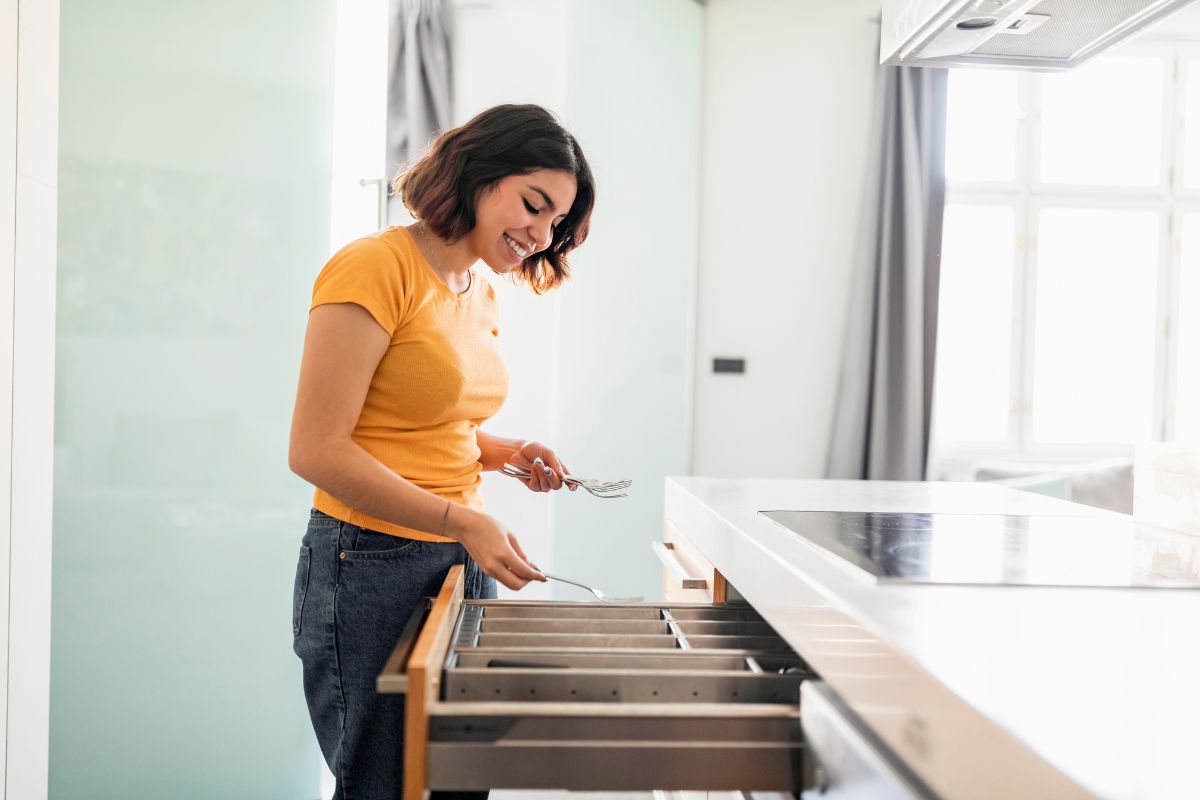
Keeping an organized home doesn’t mean that everything has to be perfectly in place at all times, but it can be helpful to have designated places to store items that you use often. For example, placing a rack or tray by the door where you put your keys each time you get home or a basket where you keep items that you use regularly can make it easier to find what you need.
You also don’t have to declutter your home all at once. Starting by clearing out one drawer or decluttering a surface can help create momentum for you to complete the job over time. Implementing organization and decluttering in your home can calm your mind and reduce the frustration that comes with constantly searching for lost items.
Geometry
It might sound odd that the shape of your home or the items in it can make a difference in how you feel, but studies have explored how our minds respond differently to various shapes and forms. One 2024 study found that participants who experienced a curved room reported higher positive emotions, lower negative emotions, and lower heart rates compared to when they experienced a rectangular room. The results of this study also supported that the shape of the room impacted creative output, as participants were able to engage more creatively when experiencing a curved room. (Strachan-Regan & Baumann, 2024)
You may not be able to change the shape of your room, but you could consider adding curved furniture or other objects to your space to incorporate softer shapes and create an environment that feels more comfortable and inviting.
Personal touches
A home can be a place to get creative and express yourself. By adding meaningful elements and designing it based on your own personality or preferences, you can give yourself a creative outlet and design a home that feels like you.
Adding personal touches to your space can also help create a sense of comfort and belonging. This could include displaying photos of your loved ones, artwork made by you or someone you care about, or items that hold sentimental value for you.
Conclusion
You deserve a home that feels warm, inviting and calming. By taking a few small steps like improving your lighting, decluttering, adding personal touches and intentionally curating the space, you can create a grounding environment to come home to after a long day.
You don’t have to overhaul your space or aim for perfection for your home to be a place where you can rest, recharge and feel comfortable. Even small changes can make a difference in how you experience your space and how you feel when you’re in it.
Resources for housing insecurity
If you are experiencing homelessness, housing insecurity, or are at risk of losing your housing, support is available.
Chicago resources
Provides housing and supportive services for women experiencing homelessness in Chicago, including basic-needs support, case management, and pathways to permanent housing.
Provides supportive housing and services for unaccompanied women experiencing homelessness. Their permanent supportive housing programs are accessed through Chicago’s Coordinated Entry System.
Facing Forward to End Homelessness
Supports individuals and families experiencing or at risk of homelessness through permanent supportive housing, housing assessments, case management, and connections to other resources.
Offers housing counseling and assistance related to housing stability, including rental and eviction-prevention counseling and other housing resources.
Chicago Housing Authority (CHA)
Provides access to subsidized housing programs, including public housing and project-based rental assistance. CHA also directs people experiencing homelessness to Chicago’s Coordinated Entry System.
National Resources
- HUD Find Shelter: HUD Find Shelter allows you to search for shelters, housing assistance, and other resources in your area.
- 211: Dial 211 to connect with local community resources, including housing and homelessness assistance.
- HUD Housing Counseling: HUD-approved housing counselors can provide guidance related to renting, housing affordability, eviction, and other housing concerns.
Sources
- Anderson, J. C. (2026, August 24). The color lab uncovers the soothing effects of Light. UC Davis.
- Bar, M., & Neta, M. (2006, August). Humans prefer curved visual objects - moshe bar, Maital Neta, 2006. Psychological Science.
- Ferrari, J. (2023, February). Speaking of Psychology: Why clutter stresses us out, with Dn. Joseph Ferrari, PhD. American Psychological Association.
- Lee, M.-S., Lee, J., Park, B.-J., & Miyazaki, Y. (2015, April 28). Interaction with indoor plants may reduce psychological and physiological stress by suppressing autonomic nervous system activity in young adults: A randomized crossover study. Journal of physiological anthropology.
- Strachan-Regan, K., & Baumann, O. (2024, March 16). The impact of room shape on affective states, heartrate, and creative output. Heliyon.
All material provided on this website is for informational purposes only. Direct consultation of a qualified provider should be sought for any specific questions or problems. Use of this website in no way constitutes professional service or advice.