

How Pets Support Mental Health: Benefits, Science, and Limits
Introduction
Have you ever looked down at your pet and asked “What would I do without you?”. If so, you are not alone. In fact, 86% of pet owners report that their pets have a positive impact on their mental health and 88% consider their pets to be a part of their family. (APA 2023)
For centuries, pets have been an important part of human lives. (Smithsonian, 2016) Beyond providing companionship, they can contribute significantly to emotional and mental well-being. During life’s most difficult moments, pets serve as a source of comfort, support, and connection. Their role in creating structure, offering emotional support, and reducing anxiety is invaluable for many individuals.
How do pets support mental health?
1. Pets provide unconditional love and companionship.
Emotional support is one of the many benefits of having a pet. If you are finding that you need a little extra comfort during stressful times, spending time with your pet can be a great way to receive that. Pets do not judge and can offer a calming presence regardless of what your mood might be.
2. Reducing stress and anxiety
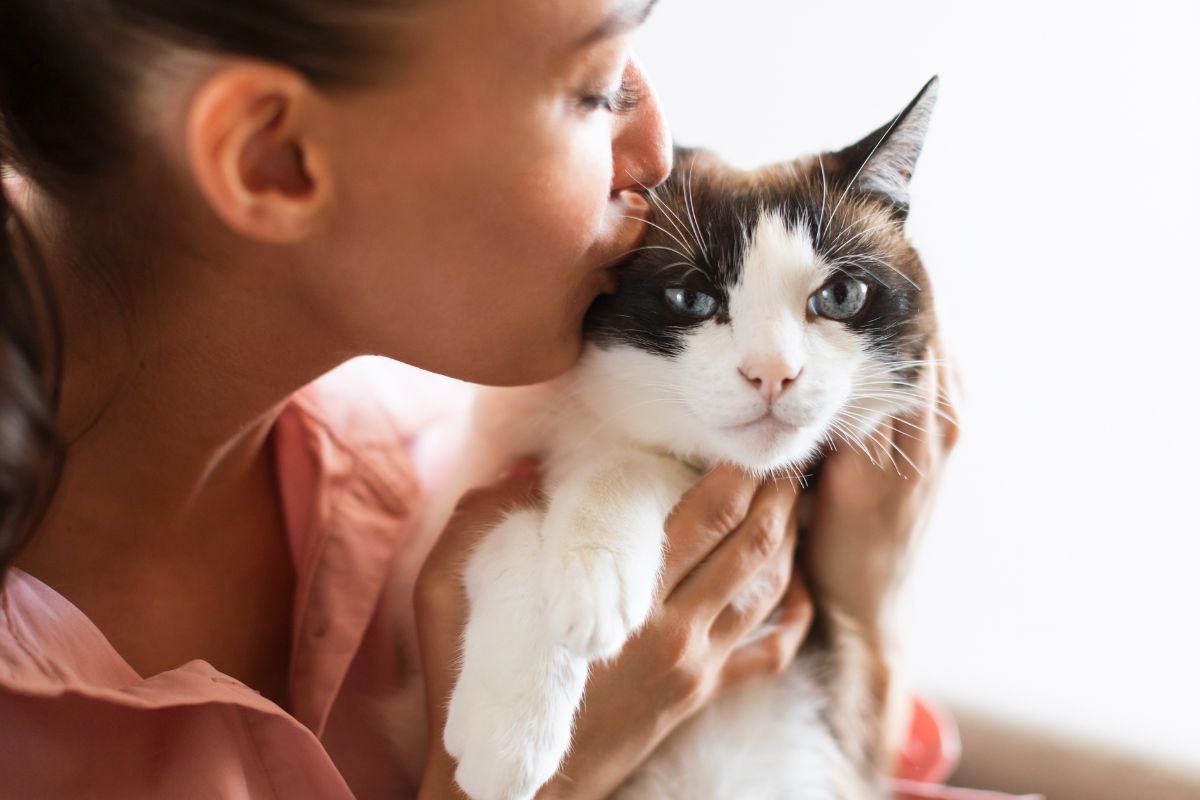
Interacting with pets can promote relaxation through tactile interaction and physical affection. Their soft fur and gentle presence, along with their soothing behaviors, such as a cat’s purring or a dog’s calm demeanor, can create a sense of comfort and stability when life feels overwhelming. Petting, cuddling, or spending time with an animal can calm the mind, reduce feelings of stress and anxiety, and provide comfort in moments of emotional distress.
Spending time with your pet can offer a sense of grounding and stability when you are experiencing heightened anxiety. Additionally, pets can offer a temporary distraction from worries, making it easier to reconnect with the present moment.
3. Encouraging healthy routines and physical activity
When you have a pet, there is a responsibility to care for them that naturally creates a routine for your day. Tasks like walking and feeding offer a sense of purpose and consistency. Walking a dog or engaging in playtime with cats can be a great way to get movement throughout the day.
Even short walks or play sessions can add up over time and increase the overall time you spend on movement which in turn can boost your mood and improve mental health outcomes. Routines provide consistency and predictability during difficult times and can be a beneficial part of managing mental health.
4. Combatting loneliness and isolation
Pets can be a great way to reduce loneliness by offering companionship. While social isolation can be difficult, pets can offer a sense of connection through their constant presence and affection. Pets can also encourage social interactions with others while out on walks, at the dog park or through conversations with fellow pet owners. These interactions can help build relationships and reduce social isolation over time.
5. Encouraging mindfulness
Pets remind us to focus on the present moment. While anxiety may drive us to think about the future, pets are focused on the now and can help ground us in the now. Through interacting with pets, we are encouraged to slow down and take the time to appreciate simple moments in life.
6. Fostering a sense of purpose
Sometimes mental health challenges can make it challenging to feel connected to purpose in life. The responsibility of caring for another living being can bring a sense of fulfillment and purpose in life. When someone else is counting on you, it can be a meaningful reason to stay engaged in your daily routines.
The Science behind pets and mental Health
Research shows that spending time with pets can increase the release of oxytocin in the brain. Oxytocin, often called the "bonding hormone," helps build trust and strengthen social connections, including those between humans and their pets. Increased oxytocin levels have also been linked to positive emotions and improved well-being (Marshall-Pescini et al., 2019).
Emotional support animals versus pets
Any pet can be a source of emotional support, but emotional support animals (ESA’s) are specifically recognized as animals that provide comfort to individuals with diagnosed mental health conditions. These companion animals are recommended by mental health professionals as part of a treatment plan. If you have a diagnosed mental health condition and are considering having your pet recognized as an ESA, you can use resources like Pettable to talk to a licensed clinician who can determine whether an emotional support animal is appropriate for your treatment plan.
Why pets are not a complete mental health solution
Pets can be a great source of emotional support but they are not a replacement for mental health care. If you are struggling to manage your mental health, pets can be a supplemental tool in addition to seeking professional support.
While pets can be an incredible source of comfort and joy for many, there are still many responsibilities that come with being a pet parent. For some, it may be difficult to keep up with the constant needs that pets have. If you feel like you may not be ready to care for a pet, consider volunteering to walk dogs at a shelter or foster a pet temporarily to see if it could be a good fit before committing.
Mental health treatment looks different for everyone and may include therapy, medication, support groups or other forms of professional support in addition to spending time with pets.
Conclusion
Having a pet can be a great way to gain comfort and love while creating structure in your life. At the end of a long day, having someone who greets you with unconditional support and genuine excitement to see you can be an incredibly fulfilling experience. If you already have a pet, pay attention to how that impacts your mental health. Next time you find yourself struggling, try spending time with your pet as a way to practice coping and regulation. If you don’t have a pet, try spending time in nature where you can see animals in the wild or at your local shelter where you can interact with them directly.
Sources
- Americans Note Overwhelming Positive Mental Health Impact of Their Pets in New Poll; Dogs and Cats
- Brooks, H. L., Rushton, K., Lovell, K., Bee, P., Walker, L., Grant, L., & Rogers, A. (2018, February 5). The power of support from companion animals for people living with mental health problems: A systematic review and narrative synthesis of the evidence - BMC psychiatry. SpringerLink.
- Cleveland Clinic. (2022). Oxytocin: What it is, Function & Effects.
- Marshall-Pescini, S., Schaebs, F. S., Gaugg, A., Meinert, A., Deschner, T., & Range, F. (2019, October 12). The role of oxytocin in the dog–owner relationship - PMC. National Library of Medicine.
- The power of pets: Health Benefits of Human-Animal Interactions
- Ask Smithsonian: When Did People Start Keeping Pets?
All material provided on this website is for informational purposes only. Direct consultation of a qualified provider should be sought for any specific questions or problems. Use of this website in no way constitutes professional service or advice.


.jpg)