
Why Do I Feel So Anxious? Understanding Your Emotional Thermostat
If you've ever struggled with anxiety, uncertainty, fear, or even sadness, you've probably wished you could simply turn those feelings off. They can be uncomfortable, exhausting, and at times completely overwhelming. It's easy to believe that if we could just get rid of them, life would feel so much easier. But what if those feelings aren't actually the enemy? What if they're doing exactly what they're designed to do?
The Thermostat Metaphor
Imagine the thermostat in your home. You set it to a comfortable temperature, and throughout the day it quietly regulates the temperature to the environment. If the room becomes too cold, it signals the heat to turn on. If it gets too warm, it tells the air conditioning it's time to cool things down. The thermostat isn't creating the weather. It's simply responding to changes in the environment with one goal: maintaining balance.
Our emotions work in a very similar way. Anxiety, uncertainty, fear, sadness, frustration, and even guilt are all part of an incredibly sophisticated internal system that's constantly gathering information. Anxiety alerts us to potential challenges and prepares us to respond. Fear encourages caution when something may be dangerous. Sadness helps us slow down and process loss. Anger lets us know that something feels unfair or that one of our boundaries may have been crossed. Uncertainty reminds us that we're entering unfamiliar territory and encourages us to pause before rushing ahead. None of these emotions are inherently bad. They are signals, not character flaws.
The problem isn't that we have emotions. The problem begins when our emotional thermostat is no longer calibrated to the present moment.
When the Thermostat is Set Too High
Think about a thermostat that's set too high. Even the slightest drop in temperature causes the furnace to blast heat. A room that only needed a small adjustment quickly becomes uncomfortably warm because the thermostat believes something much bigger is happening than what actually is. Our nervous system can do something similar. Someone with anxiety may experience a racing heart before sending a simple email, speaking up in a meeting, or making a small decision. Another person may feel intense uncertainty when choosing between two good opportunities because their brain interprets uncertainty itself as danger. The emotional alarm is real, but the intensity of the response no longer matches the situation.
This isn't a sign of weakness, nor does it mean you're "broken." More often, it reflects what your nervous system has learned over time. Our brains are remarkably adaptable. If you've lived through chronic stress, experienced unpredictable environments, been criticized repeatedly, or spent years feeling like you always had to perform perfectly, your emotional thermostat may gradually become more sensitive. It starts detecting possible threats earlier because, at one point, that sensitivity increased the chances of staying safe, accepted, or prepared. What once served as protection can continue operating long after the circumstances have changed.
When the Thermostat is Set Too Low
The opposite can happen as well. Imagine a thermostat that's set far too low. The house becomes colder and colder, yet the heat never turns on because the thermostat doesn't recognize that anything is wrong. Some people experience emotions in a similar way. They disconnect from anxiety until they suddenly burn out. They ignore sadness until it turns into emotional numbness. They suppress anger until it eventually comes out in unexpected ways. From the outside, this may look like resilience or emotional control. In reality, it may simply be a nervous system that has become disconnected from its own signals. Just because you don't notice the temperature doesn't mean the room isn't getting colder.
This is why the goal of emotional health isn't to never experience difficult feelings. In fact, a world without anxiety would be surprisingly dangerous. You wouldn't prepare for an important presentation. You wouldn't notice when something felt unsafe. You might ignore deadlines, relationships, or situations that genuinely require your attention. Likewise, without sadness, we wouldn't fully process loss. Without anger, we might repeatedly allow our boundaries to be crossed. Without uncertainty, we might become overconfident and stop considering important information before making decisions.
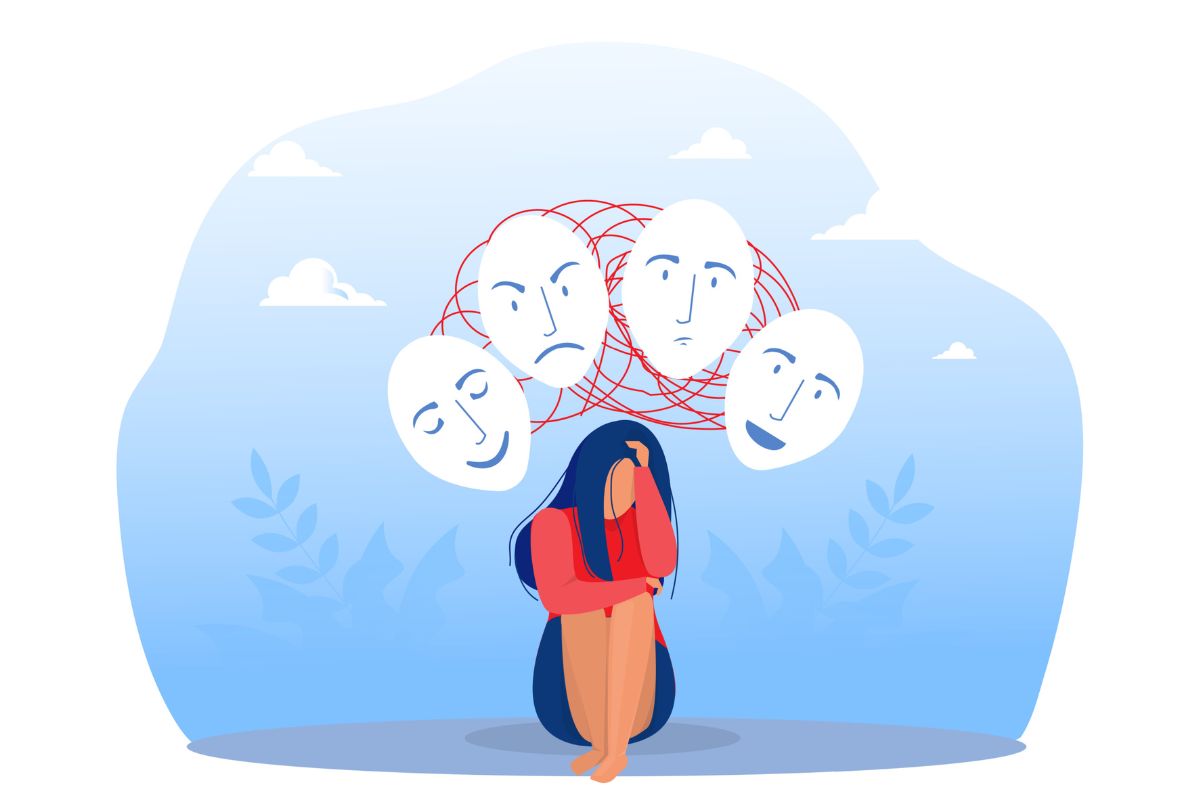
Every Emotion Has a Purpose
Every emotion has a purpose. Difficulties arise when our emotional thermostat is set too high or too low.
Many of us were never taught this. Instead, we learned that uncomfortable emotions should be avoided, fixed, distracted from, or judged. We tell ourselves, "I shouldn't feel anxious," or "Why can't I just get over this?" The moment discomfort appears, we sometimes immediately begin trying to make it disappear. While that's understandable, it often creates another layer of struggle. We stop listening to what our emotions are trying to communicate because we're too busy arguing with the fact that they're there.
Asking a Better Question
A more helpful question isn't, "How do I stop feeling this?" A better question might be, "What is this emotion trying to signal?" Anxiety may be encouraging you to prepare. Uncertainty may be reminding you that you're stepping into something new. Sadness may be asking you to slow down. Anger may be highlighting that something important to you has been violated. The emotion itself isn't necessarily the problem. Understanding whether its intensity fits the situation is often where the real work begins.
Of course, emotions are not facts. An anxious mind may predict failure when there is very little evidence that failure is actually coming. A fearful mind may mistake discomfort for danger. An uncertain mind may insist that you need absolute certainty before taking the next step, even though certainty is something life rarely offers. Our emotions provide valuable information, but they don't always provide accurate conclusions. They deserve our attention, not automatic obedience.
How Therapy Helps Recalibrate
This is one of the reasons therapy can be so helpful. Rather than trying to eliminate emotions, therapy often focuses on helping people recalibrate their emotional thermostat. Over time, your nervous system begins learning that not every uncomfortable feeling signals an emergency. You become better at recognizing the difference between real danger and perceived danger, between uncertainty and actual risk, between making a mistake and being unsafe. The emotions don't disappear, but they begin responding in ways that are more proportionate to what is happening in the present rather than what was learned in the past.
Perhaps the greatest shift comes when we stop seeing intense emotions as evidence that something is wrong with us. Feeling anxious doesn't automatically mean you're weak. Feeling uncertain doesn't mean you're incapable. Feeling sad doesn't mean you're broken. Often, these emotions are evidence that your mind and body are doing exactly what they were designed to do: notice, protect, adapt, and respond.
Building a New Relationship With Your Emotions
The next time you notice anxiety building, uncertainty creeping in, or another intense emotion taking center stage, imagine your internal thermostat quietly clicking on. Before trying to shut it off, pause for a moment and ask yourself what it might be responding to. Is the intensity matched to what's happening today, or could your thermostat be reacting to experiences from another chapter of your life? Maybe the setting has become a little too sensitive. Maybe it's become so quiet that it's difficult to hear. Either way, the answer isn't to rip the thermostat off the wall.
The goal isn't to get rid of the feeling. The goal is to build a relationship with your emotions where you can notice them, understand their purpose, and respond thoughtfully instead of automatically. Over time, your internal thermostat can become more accurately calibrated. Not because life stops throwing challenges your way, but because your nervous system learns that it doesn't have to treat every change in temperature as a crisis. Emotional well-being isn't a life free of uncomfortable emotions. It's learning to make room for them, understand what they're telling you, and choose how you want to respond.
All material provided on this website is for informational purposes only. Direct consultation of a qualified provider should be sought for any specific questions or problems. Use of this website in no way constitutes professional service or advice.

.jpg)