
The Hidden Mental Health Toll of Financial Uncertainty
Financial uncertainty can have far reaching impacts on a person’s life and can be even more difficult when the broader economic landscape is unstable. This can be an emotionally exhausting experience that impacts mental health due to increased stress. Rising costs and job uncertainty have become more common than ever as we all try to balance our responsibilities with our lives.
It has become increasingly difficult to plan for the future for many people which can be an incredible mental and emotional drain. Financial stress can be even more complicated when it is chronic as it often leads to persistent nervous system dysregulation, meaning the body is stuck in a chronic state of stress. This chronic stress can affect daily functioning and take a toll on relationships, work and overall emotional well-being.
What is contributing to American’s financial stress?
If you’ve been feeling additional financial pressure lately, you’re not alone. While financial pressure is not new, rising costs and an unstable job market have created additional stress for many households.
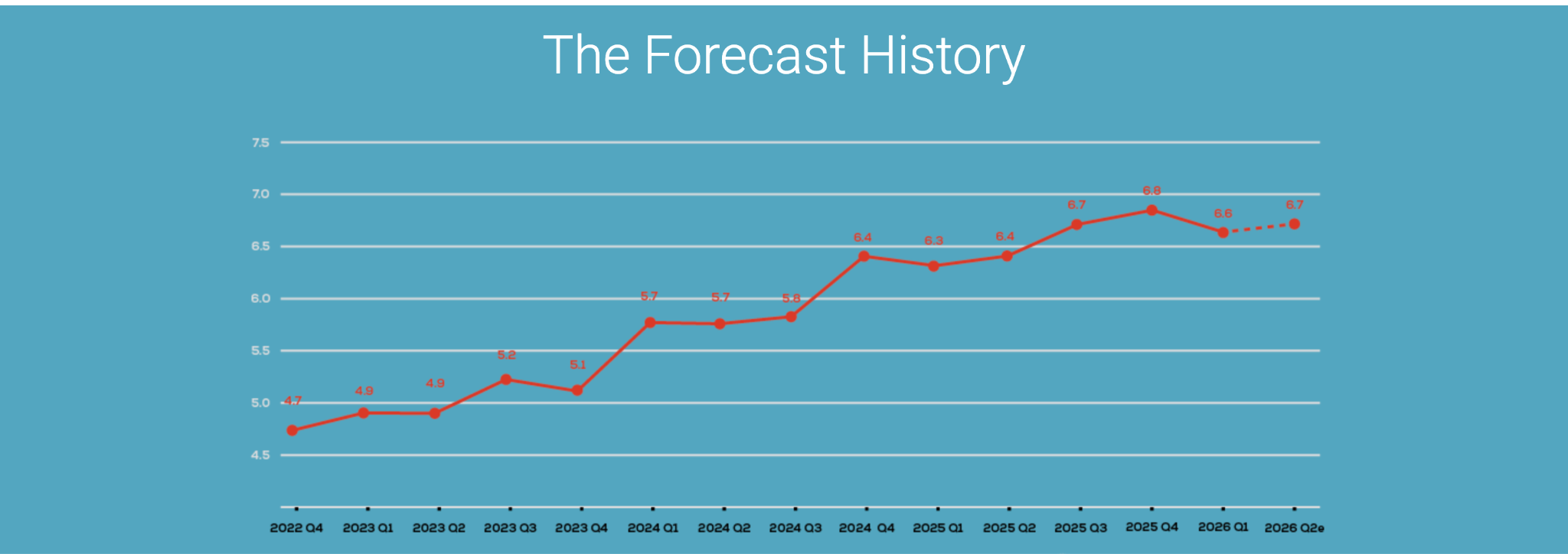
According to the National Foundation for Credit Counseling, their recent Financial Stress Forecast indicated that Americans are projected to hit a 6.7 on a scale out of 10 in Q2 of 2026. This forecast measures financial stress by looking at the population’s financial behaviors and attitudes. The most recent results indicate that Americans are ‘entrenched’ in financial stress and that they are operating under ‘sustained financial pressure’. For reference, the forecast after the pandemic in 2021 indicated a 3.5 on their scale. This shows just how quickly things have taken a turn towards economic instability for everyday citizens.
Additionally, the amount of debt that an average family carries has skyrocketed since the pandemic. According to the Federal Reserve Bank of New York, the total debt that American’s hold has reached $18.8 trillion dollars as of Q1 of 2026. This includes an amount of $1.25 trillion in credit card debt.
How financial stress can impact day to day life
Financial stress can impact so many different aspects of life, often in ways that go beyond the finances alone and extend to social, physical, mental, relational and emotional well-being.
Social life:
Chronic financial stress often leads to forced social isolation. It can be expensive to create new social connections and to maintain friendships. Costs can add up and it can be difficult to lead a fulfilling social life when you are feeling overwhelmed financially. Even if you decide to hang out at home to save money, you may need to buy gas, parking or public transportation to meet at your friend’s home or a snack to offer them if they choose to visit you. Birthdays, babyshowers, housewarmings, and summer cookouts can add up and feel like a never ending cycle of obligation when money is tight. Not only is it hard to stretch yourself and show up for everyone when your nervous system is in fight or flight, but it can be taxing to come up with money every time you are invited somewhere.
Food insecurity:
With food costs rising 3.2% since April 2025, it has been hard for many people to feed themselves and their families. (USDA, 2026) Without proper nutrition, it can be challenging to function on a daily basis. This can lead to symptoms like lower cognitive function which can cause brain fog and difficulty focusing. (Portela-Parra & Leung, 2019) This can result in not only mental health concerns but physical health concerns as well.
Hobbies/extracurricular activities:
During periods of financial stress, it can feel impossible to engage with hobbies. Many people who experience financial stress take on second jobs and may simply not have the time to learn something new. It can also be very expensive to take a class, join a sport or buy supplies to start a new hobby. This can prevent people from using extracurricular activities as a way to de-stress and can also make it harder to meet new people.
Relationships and family dynamics:
Relationships often tend to suffer due to financial strain. The capacity to participate in healthy conflict and communication can be lowered when someone is under chronic stress. What can be uniquely challenging about this is that conflict may come up more often surrounding the topic of finances increasing tension and pressure on the relationship. Irritability and emotional withdrawal due to ongoing financial stressors can also have an effect on relationship dynamics.
Mental load and decision fatigue:
Having a running calculator in your head can feel like climbing a never-ending mountain. Consistently needing to decide which bills to prioritize, how much food to buy at the store to get by for the next two weeks, and how to manage unexpected expenses can create a near constant state of mental exhaustion.
How financial stress can affect the nervous system
Chronic stress can create increased muscle tension, sleep issues leading to fatigue, increased hypervigilance around spending and bills, and even headaches or migraines. (APA, 2018) This is because when the nervous system is dysregulated on a long term basis, it can lead to the body being stuck in “fight or flight mode” which can make it hard to ever truly relax or recover from stress. Over time, this can cause burnout leading to a decreased ability to engage in daily activities and feelings of overwhelm that leave you emotionally drained.
How to regulate your nervous system and respond to chronic stress during financial uncertainty
Don’t force yourself to review your entire budget at one time, review one bill at a time and monitor yourself for increased stress. You are allowed to take breaks as needed to regulate.
1. Grounding Exercises
Grounding exercises can be helpful tools when things start to feel overwhelming. Here are a few of my favorite:
- 5-4-3-2-1: Name 5 things you can see, 4 things you can touch, 3 things you can hear, two things you can taste and 1 thing you can taste.
- Press your feet into the floor: Notice the sensation of your feet connecting with the ground and gently apply pressure to anchor yourself in the present moment.
- Deep breathing Inhale through the nose for 4 counts, hold for 4 counts, and exhale through the mouth for 4 counts. Try placing one hand on your abdomen and one hand on your chest to notice the movement of your breath.
- Stretching: Slow, intentional stretching can reduce muscle tension and bring awareness back to your body.
- Taking a walk outside: Engaging with nature can be an effective way to regulate your nervous system.
2. Look for low cost joy
Here are a few low cost ideas:
- Join library programs- check out a book while you are there!
- Attend free museum days
- Spend a day at your local plant conservatory
- Join a walking group
- Create crafts with supplies you already have at home
- Find your local community center and find out what events they have coming up
3. Reduce shame and isolation
- Talk openly about financial stressors with trusted friends
- Remember that you did not do anything wrong, finances are based on a variety of factors which often include circumstances that are beyond your control
- Seek community resources (here are a couple that apply broadly)
- Seek therapy services with an intern for a lower cost option. You can reach out to Sage Therapy for help finding an intern to work with if you are in the state of Illinois. If you are outside of Illinois, check with a local therapy practice to see what options they may offer for lower cost therapy.
Financial uncertainty and chronic stress are increasingly common and it is important to normalize that you are not the only one having these experiences. Emotional responses to these stressors are natural ways that your mind is trying to adapt to uncertainty and pressure. While so much can be outside of your control when it comes to finances, building small moments of stability through connection, grounding practices and self-compassion can help reduce the intensity of chronic stress. Even when there isn’t an immediate change to your circumstances in sight, you deserve to connect with your humanity and find ways to feel grounded during periods of instability.
References
- APA. (2018, November 1). Stress effects on the body. American Psychological Association.
- Clinic, M. (2023, August 1). Chronic stress puts your health at risk. Mayo Clinic.
- Fed, N. (2026, May 12). Household debt balances rise slightly as delinquency transition rates hold steady. Household Debt Balances Rise Slightly as Delinquency Transition Rates Hold Steady - FEDERAL RESERVE BANK of NEW YORK.
- Health, L. (2024, April 1). Improving financial stress: Causes, signs, and solutions. Lyra Health.
- Marketing, V. C. and. (1970, August 21). Improving financial stress: Causes, signs and solutions. Vanderbilt University.
- McNair, K. (2026, May 24). Americans are “entrenched” in financial stress amid debt and price pressures. CNBC.
- NFCC. (2026, May 20). Financial stress forecast - NFCC - national foundation for credit counseling. National Foundation for Credit Counseling.
- USDA. (2026, May). Food price outlook - summary findings. Food Price Outlook - Summary Findings | Economic Research Service.
- Wrosch, C., Heckhausen, J., & Lachman, M. E. (2000). Primary and secondary control strategies for managing health and financial stress across adulthood. Psychology and Aging, 15(3), 387–399.
- Zilber, A. (2026, May 25). Americans are under intense financial stress as household debt reaches $18.8T. New York Post.
All material provided on this website is for informational purposes only. Direct consultation of a qualified provider should be sought for any specific questions or problems. Use of this website in no way constitutes professional service or advice.
.jpg)